What this article covers
A practical guide to Bioidentical Hormones
- Key context behind Bioidentical Hormones
- Where personalized compounding may fit into the discussion
- What to review with a qualified prescriber or pharmacist
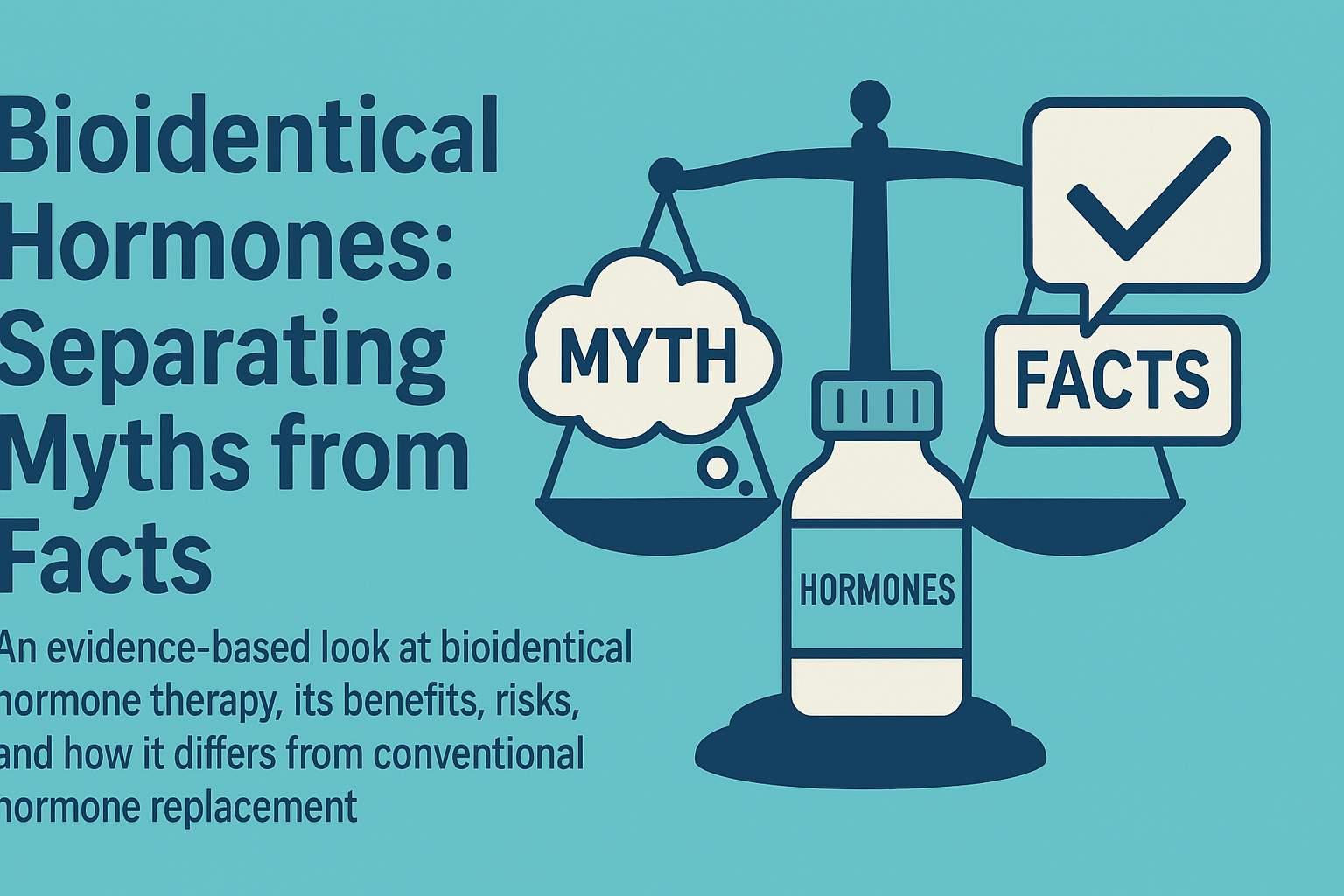
The field of hormone therapy has evolved significantly over the past few decades, with bioidentical hormone replacement therapy (BHRT) emerging as a popular alternative to conventional hormone treatments. Yet, despite its growing popularity, bioidentical hormones remain surrounded by confusion, misconceptions, and sometimes exaggerated claims. This article aims to provide an evidence-based examination of bioidentical hormones, clarifying what they are, how they work, and what the scientific literature actually tells us about their benefits and risks.
What Are Bioidentical Hormones?
Bioidentical hormones are compounds that have exactly the same chemical and molecular structure as hormones produced naturally in the human body. This structural identity is the key distinction between bioidentical hormones and conventional hormone replacement therapy (HRT) options, which may use hormones that are similar but not identical to those found in humans.
Common bioidentical hormones include:
- Estradiol (a form of estrogen)
- Estriol (another form of estrogen)
- Progesterone
- Testosterone
- Dehydroepiandrosterone (DHEA)
These hormones can be derived from plant sources such as soy or yams, but they undergo significant laboratory processing to achieve the bioidentical structure. It's important to note that "natural" and "bioidentical" are not synonymous terms—bioidentical hormones require laboratory modification regardless of their original source.
Bioidentical vs. Conventional Hormone Therapy: Key Differences
To understand the debate surrounding bioidentical hormones, it's essential to recognize how they differ from conventional hormone replacement options:
Molecular Structure
Bioidentical hormones: Exact structural match to human hormones, which theoretically allows them to fit precisely into hormone receptors in the body.
Conventional hormones: May include modified or non-human hormones such as conjugated equine estrogens (derived from pregnant mares' urine) or synthetic progestins like medroxyprogesterone acetate, which have slightly different structures than human hormones.
Regulatory Oversight
Bioidentical hormones: Available as both FDA-approved commercial products and as custom-compounded formulations. Compounded formulations allow for personalized dosing but have less regulatory oversight.
Conventional hormones: Typically FDA-approved with standardized dosing and manufacturing processes.
Customization
Bioidentical hormones: When compounded, can be tailored to individual hormone levels and specific patient needs.
Conventional hormones: Generally available in standardized doses with less customization.
Myth #1: "All Bioidentical Hormones Are Natural and Therefore Safer"
One of the most persistent myths about bioidentical hormones is that they are completely natural and therefore inherently safer than conventional hormone therapies. This misconception stems from marketing that emphasizes the plant origins of these hormones.
The Facts: While bioidentical hormones may start with plant compounds, they undergo significant laboratory processing to achieve their final structure. The term "bioidentical" refers to their molecular structure matching human hormones, not to their being unprocessed or natural substances.
Furthermore, "natural" does not automatically mean "safer." All hormones, whether bioidentical or conventional, can have significant effects on the body and carry potential risks. The safety profile depends on multiple factors including dosage, administration route, individual patient characteristics, and duration of use—not simply whether the hormone is bioidentical.
Myth #2: "There's No Scientific Evidence Supporting Bioidentical Hormones"
Some critics claim that bioidentical hormones lack scientific backing, particularly compared to conventional HRT.
The Facts: There is actually substantial research on certain bioidentical hormones, particularly those available as FDA-approved products. For example:
- Bioidentical estradiol has been extensively studied and is available in multiple FDA-approved formulations (patches, gels, tablets).
- Bioidentical progesterone (as opposed to synthetic progestins) has been researched for its effects on sleep quality, cardiovascular health, and breast tissue.
- Bioidentical testosterone therapy has been studied for both men and women, with research on its effects on libido, energy, and body composition.
However, it's true that custom-compounded combinations of bioidentical hormones have fewer large-scale clinical trials compared to standardized conventional therapies. This is partly due to the individualized nature of compounded formulations, which makes standardized research more challenging.
Myth #3: "Bioidentical Hormones Have No Side Effects"
Some proponents claim that because bioidentical hormones match the body's natural hormones, they don't cause side effects.
The Facts: All hormones, including bioidentical ones, can cause side effects. The body responds to hormones based on their chemical structure and concentration, regardless of whether they're produced internally or administered externally.
Potential side effects of bioidentical hormone therapy may include:
- Bloating
- Breast tenderness
- Mood swings
- Headaches
- Breakthrough bleeding
- Acne (particularly with testosterone)
More serious potential risks, which require careful consideration and monitoring, include:
- Blood clots
- Stroke
- Gallbladder disease
- Potential effects on hormone-sensitive cancers
Myth #4: "Saliva Testing Is the Best Way to Monitor Hormone Levels"
Some BHRT providers exclusively recommend saliva testing for hormone assessment and monitoring.
The Facts: While saliva testing can measure free (unbound) hormone levels, it has limitations and is not universally accepted as the gold standard for all hormones. Different testing methods have different strengths:
- Serum (blood) testing: Considered the standard for many hormones, particularly for initial diagnosis. Measures total hormone levels (both bound and unbound).
- Saliva testing: Measures free hormone levels and can be useful for certain applications, but results can be affected by factors like hydration status and contamination.
- Urine testing: Can provide information about hormone metabolites, offering insights into how the body processes hormones.
The most appropriate testing method depends on which hormones are being measured, the clinical context, and the specific question being addressed. Often, a combination of testing methods provides the most comprehensive picture.
The Evidence: Benefits of Bioidentical Hormones
Research has identified several potential advantages of bioidentical hormones when used appropriately:
Symptom Relief
Bioidentical hormones have demonstrated effectiveness in relieving menopausal symptoms such as hot flashes, night sweats, vaginal dryness, and sleep disturbances. For example, bioidentical estradiol delivered via patches, gels, or vaginal preparations has shown significant efficacy in clinical trials.
Cardiovascular Considerations
Some research suggests that bioidentical progesterone may have a more favorable effect on cardiovascular markers compared to synthetic progestins. A 2009 study published in the journal Maturitas found that bioidentical progesterone had neutral or beneficial effects on blood lipids, while synthetic progestins had some adverse effects.
Cognitive Function
Some studies suggest potential cognitive benefits from estradiol therapy, particularly when initiated close to menopause. Research published in Neurology has indicated that estrogen therapy might help maintain cognitive function in some women, though results vary based on timing and individual factors.
Bone Health
FDA-approved bioidentical estradiol formulations have been shown to help prevent bone loss and reduce fracture risk in postmenopausal women, similar to conventional HRT.
The Evidence: Risks and Concerns
A balanced assessment must also acknowledge potential risks and limitations:
Cancer Considerations
All estrogens, including bioidentical forms, may stimulate breast and uterine tissue. Women with an intact uterus who take estrogen should also take progesterone to protect the uterine lining. The relationship between hormone therapy and breast cancer risk remains complex and depends on multiple factors including formulation, duration of use, and individual risk factors.
Cardiovascular Risk
The timing of hormone therapy initiation appears crucial. The "timing hypothesis" suggests that starting hormone therapy close to menopause may have neutral or beneficial cardiovascular effects, while starting many years after menopause may increase risks. This applies to both bioidentical and conventional hormones.
Compounding Quality Concerns
Custom-compounded bioidentical hormones may have more variability in quality, potency, and purity compared to FDA-approved products. A 2014 study in Menopause found significant inconsistencies in compounded hormone preparations across different pharmacies.
The Personalization Advantage: When Compounding Makes Sense
While FDA-approved bioidentical hormones are appropriate for many patients, compounded formulations offer advantages in specific situations:
- Allergies or sensitivities: Patients who react to fillers, preservatives, or dyes in commercial products may benefit from compounded formulations that omit these ingredients.
- Dosing flexibility: Patients who need doses not available in commercial products can receive precisely tailored amounts.
- Combination formulations: Multiple hormones can be combined in a single preparation for convenience.
- Alternative delivery methods: Compounding allows for delivery systems that may not be commercially available for certain hormones.
Making Informed Decisions: A Balanced Approach
When considering bioidentical hormone therapy, a thoughtful approach includes:
Comprehensive Evaluation
Before starting any hormone therapy, a thorough assessment should include:
- Complete medical history and family history
- Physical examination
- Appropriate laboratory testing
- Discussion of symptoms, goals, and concerns
Evidence-Based Selection
When possible, FDA-approved bioidentical hormone products provide a good balance of personalization and regulatory oversight. Compounded formulations should be reserved for specific needs that cannot be met with approved products.
Regular Monitoring
Ongoing assessment should include:
- Symptom evaluation
- Side effect monitoring
- Periodic hormone level testing as appropriate
- Regular preventive screenings (mammograms, bone density tests, etc.)
Lowest Effective Dose
Following the principle of using the lowest effective dose for the shortest necessary duration helps minimize risks while providing symptom relief.
The Role of Compounding Pharmacies
Specialized compounding pharmacies like NP Labs play a crucial role in the bioidentical hormone landscape by:
- Preparing customized hormone formulations based on individual prescriptions
- Offering various delivery methods (creams, gels, capsules, troches, etc.)
- Providing hormone combinations not available in commercial products
- Creating preservative-free or allergen-free formulations for sensitive patients
- Working collaboratively with healthcare providers to optimize therapy
Quality compounding pharmacies maintain rigorous standards for ingredient sourcing, preparation techniques, and quality control testing to ensure consistency and safety.
Beyond the Myths: A Balanced Perspective
Bioidentical hormone therapy represents neither a miracle cure nor a dangerous fad. The scientific reality lies between these extremes, offering a valuable option for many patients when prescribed appropriately and monitored carefully.
The most effective approach to hormone therapy is individualized, taking into account each patient's medical history, risk factors, preferences, and goals. By moving past myths and focusing on evidence, patients and healthcare providers can make informed decisions about whether bioidentical hormones are appropriate in each unique situation.
At NP Labs, we're committed to providing accurate information and high-quality compounded hormone formulations for patients whose needs cannot be met with standard commercial products. We work closely with healthcare providers to ensure that each patient receives the most appropriate therapy for their individual circumstances.