What this article covers
Medication design that meets children where they are
- Why pediatric dosing and dosage forms need extra care
- How excipients, allergens, and flavoring choices affect suitability
- Where compounding can support prescribers and caregivers
When "Take Your Medicine" Becomes a Daily Battle
For some families, medication time becomes a daily struggle because a child dislikes the taste, texture, smell, or form of a medicine. When that happens, caregivers often need help turning the prescriber's plan into something the child can actually take.
A compounding pharmacy can help review practical options such as flavor, dye-free preparation, alternate dosage form, measuring instructions, or packaging, when those changes fit the prescription and pharmacy review.
Across the European Union, compounding pharmacists increasingly support families like this one by addressing one of healthcare's most persistent challenges: how to make medicine workable for children.
The Pediatric Medication Challenge
Children are not simply "small adults" when it comes to medication. Their bodies process drugs differently, they require precise weight-based dosing, and they often cannot or will not take medications that taste bitter or come in forms difficult to swallow. Yet historically, pharmaceutical development has focused primarily on adult formulations, leaving pediatric patients as what experts once called "therapeutic orphans."
Pediatric medication questions are rarely one-size-fits-all. Age, weight, swallowing ability, taste, allergies, and caregiver routines can all affect whether a child can follow a prescriber's plan.
This challenge is particularly acute in the European Union, where the Paediatric Regulation entered into force in 2007 to address the low level of research and development into medicines specifically for children. While this regulation has improved the situation, significant gaps remain in commercially available pediatric-friendly medications.
The Excipient Dilemma
One of the most critical aspects of pediatric compounding involves careful consideration of excipients—the non-active ingredients in medications that serve as carriers, flavoring agents, preservatives, or fillers.
Many common excipients that are safe for adults can pose serious risks to children, particularly neonates and infants. For example, benzyl alcohol can cause metabolic acidosis and respiratory depression in newborns, while ethyl alcohol may lead to neurotoxicity and cardiovascular problems in young children.
Excipients matter in pediatric preparations. Caregivers should ask about dyes, alcohols, preservatives, sweeteners, allergens, and other ingredients that may not be obvious from the medicine name alone.
Other concerning excipients include propylene glycol, which can affect the central nervous system at high doses; parabens; benzalkonium chloride; and common allergens like peanut oil, lactose, and artificial colors. These substances accumulate more readily in a child's system due to underdeveloped organs and metabolic pathways.
Compounding pharmacists address this challenge by creating customized formulations that avoid problematic excipients while maintaining medication stability and palatability. This personalized approach is particularly valuable for children with allergies, sensitivities, or multiple medical conditions requiring careful management of ingredient interactions.
Did You Know?
Compounding pharmacies can create medications in child-friendly forms like flavored gels, lollipops, transdermal creams, and even suppositories sized specifically for pediatric patients—all while avoiding harmful excipients that could pose risks to developing systems.
Dosage Forms: Finding the Right Fit
Beyond excipient concerns, the physical form of medication presents another significant challenge in pediatric care. Conventional dosage forms often fail to meet children's needs:
Solid Dosage Forms
Traditional tablets and capsules pose several problems for children. Many young patients cannot swallow large pills, and standard dosages rarely match the precise amounts needed for different weights and ages. Breaking tablets to adjust dosage is problematic—it often results in uneven doses and may alter the release properties of controlled-release medications.
Liquid Formulations
While liquids solve the swallowing problem, they introduce other challenges. Many have palatability issues that lead to medication refusal. Oil-based suspensions pose aspiration risks that can lead to lipoid pneumonia, particularly in children under 2 years or those with swallowing difficulties.
For young children, caregivers often need to ask whether the base, texture, flavor, and measuring method are practical. These details should be reviewed with the prescriber and pharmacy team before preparation.
Alternative Approaches
Compounding pharmacists have developed innovative solutions to these challenges:
- Flavored oral gels that mask bitter tastes while providing precise dosing
- Transdermal preparations that bypass the digestive system entirely
- Lollipops and troches for older children (typically over 5 years due to choking hazards)
- Mini-suppositories sized appropriately for pediatric patients
- Flavored oral films that dissolve quickly in the mouth
Each formulation is individualized to accommodate the child's age, specific needs, and preferences, always with an emphasis on safety and accurate dosing.
The EU Regulatory Landscape
The European Union has taken significant steps to improve pediatric medication access through its Paediatric Regulation, which established the Paediatric Committee of the European Medicines Agency (PC-EMA) and the mandatory Paediatric Investigation Plan (PIP).
This regulation sets up a system of obligations, rewards, and incentives to encourage manufacturers to research and develop medicines for children's specific therapeutic needs. It obliges companies to screen every new product they develop for potential use in children and to progressively increase the number of products with pediatric indications.
Pediatric medicine rules and evidence expectations are designed to improve medicine availability, product information, and pediatric research. Compounding can still help when a commercial product is not suitable for a child's practical needs.
In December 2020, the European Commission and EMA published a progress report on their joint action plan to support the development of medicines for children in Europe. The plan aims to increase efficiency of pediatric regulatory processes and boost availability of medicines for children through actions in five key areas:
- Identifying pediatric medical needs
- Strengthening cooperation between decision-makers
- Ensuring timely completion of pediatric investigation plans
- Improving the handling of PIP applications
- Increasing transparency around pediatric medicines
Despite these regulatory advances, compounding pharmacies remain essential for addressing immediate patient needs while the broader pharmaceutical industry gradually expands its pediatric offerings.
Innovations Transforming Pediatric Compounding
Recent technological advances are changing how medications can be formulated for children. Three particularly promising approaches include:
1. 3D Printing Technology
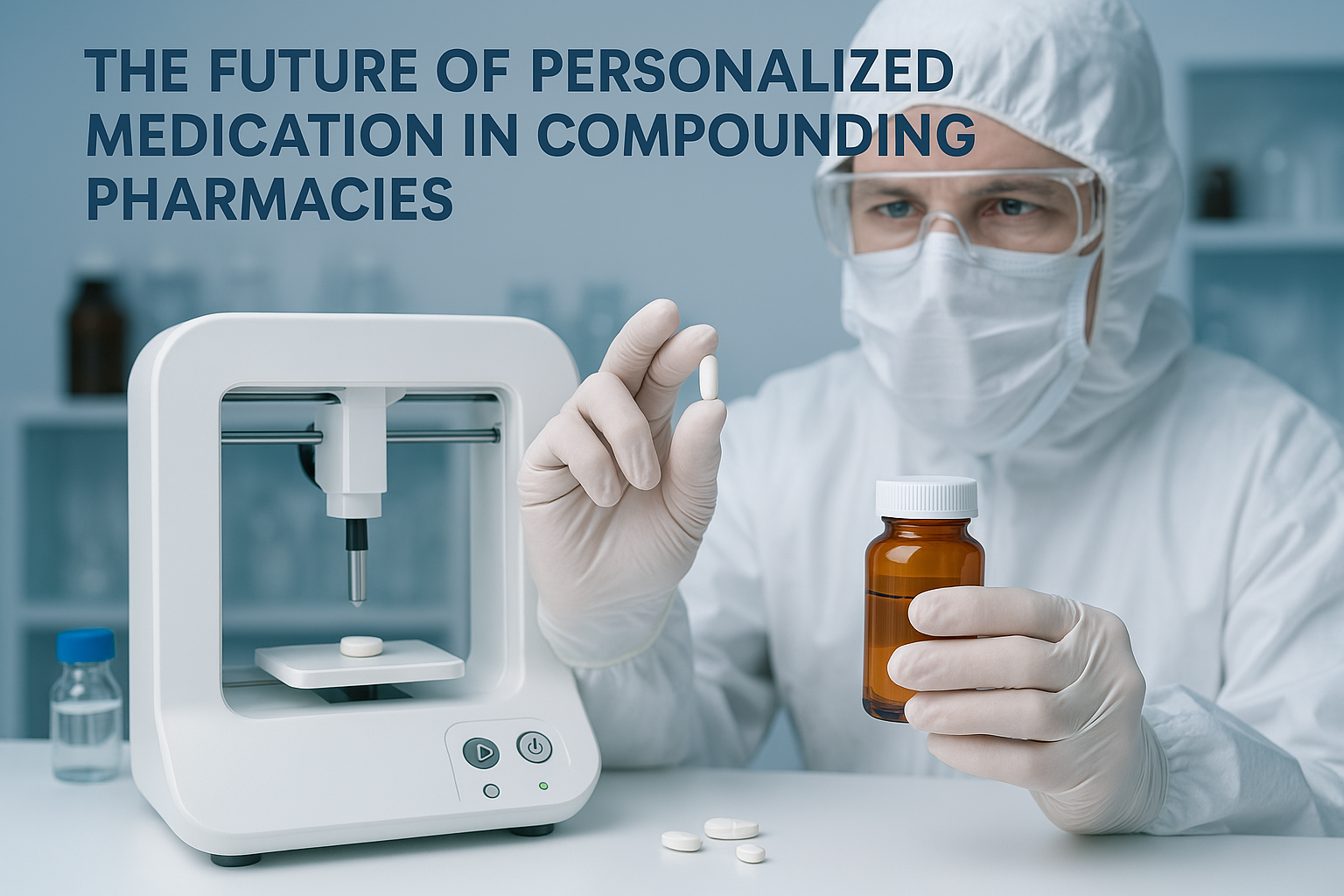
Three-dimensional printing allows for highly customized formulations with precise dosing based on a child's exact weight and needs. This technology can create medications in child-friendly shapes and sizes that improve acceptability while maintaining therapeutic efficacy.
Newer preparation technologies may give pharmacies more options to discuss with prescribers, but the same patient-first questions remain: is it appropriate, can the child take it, and are the instructions clear?
2. Prilling/Vibration Technique
This innovative approach produces multiparticulates—tiny beads of medication that are easy to swallow and offer flexible dosing options. These can be administered in various child-friendly ways, such as sprinkling on soft food or mixing with small amounts of liquid.
Multiparticulate formats can raise useful questions about swallowing, dosing, taste masking, and whether the preparation fits the child's routine.
3. Microfluidic Platforms
Microfluidics enables the production of micro- and nanocarriers that can improve drug delivery and absorption in pediatric patients. This technology allows for precise control over particle size and drug release, potentially creating more effective and palatable formulations.
These tools can be useful when a child needs a medication routine that is easier to measure, tolerate, and repeat under clinician direction.
Case Study: Making the Impossible Possible
When a five-year-old patient from Vienna was diagnosed with a rare metabolic disorder, his treatment required a combination of three medications not commercially available in pediatric formulations. The adult tablets contained excipients that could harm his already compromised liver, and the dosages were far too high for his weight.
A compounding pharmacy created a single, cherry-flavored suspension containing all three medications in precisely the right doses, free from problematic excipients. This not only simplified his treatment regimen but also protected his liver from unnecessary strain.
"Compounding made the impossible possible," explains the child's father. "Without this customized approach, we would have been forced to choose between inadequate treatment or risking serious side effects from adult formulations."
The Future of Pediatric Compounding
As technology advances and regulatory frameworks evolve, pediatric compounding continues to develop in exciting ways:
Personalized Medicine
The growing field of pharmacogenomics—studying how genes affect a person's response to drugs—is opening new possibilities for truly personalized pediatric medications. Compounding pharmacists can adjust formulations based not only on a child's weight and age but potentially on their genetic profile as well.
Digital Integration
Digital tools are improving the precision and safety of compounded medications. Electronic prescribing systems with built-in pediatric dosing calculators, barcode verification during compounding, and automated documentation systems all enhance quality control.
Collaborative Care Models
Increasingly, pediatric care involves collaboration between physicians, pharmacists, and other healthcare providers. Compounding pharmacists are becoming integral members of pediatric care teams, offering expertise in formulation options and medication management strategies.
Conclusion
Pediatric compounding represents a critical bridge between standard commercial medications and the unique needs of children. By addressing challenges related to excipients, dosage forms, palatability, and precise dosing, compounding pharmacists across the European Union can help children receive more suitable medication options when clinically appropriate.
For children like the patients described in this article, compounded medications aren't merely a convenience—they're often the difference between successful treatment and ongoing suffering. As innovations in pharmaceutical technology continue to develop and regulatory frameworks evolve, the future of pediatric compounding looks promising for Europe's youngest patients.
At NP Labs, we understand the importance of pediatric compounding and work with healthcare providers to prepare customized formulations for the needs of young patients when clinically appropriate. Our specialized compounding capabilities help address practical challenges such as dosage form, excipient selection, palatability, and pharmacy quality review.